Feng shui directions Kua number and your eight directions
The Eight Mansions (Bát Trạch) school of feng shui gives every person a Kua number from their birth year and gender. Your Kua number decides which four compass directions support you and which four drain you. Enter your birth year to see them on an interactive compass.
What is a Kua number?
The Kua (Vietnamese: cung phi) is one of the eight trigrams of the I Ching, assigned to you by your birth year and gender. Men and women born in the same year usually have different Kua numbers. There is no Kua 5: men who calculate 5 take Kua 2, and women take Kua 8. Because the calculation uses the lunar year, anyone born in January or early February before Lunar New Year uses the previous year.
Kua numbers 1, 3, 4 and 9 form the East group, whose lucky directions are North, South, East and Southeast. Kua numbers 2, 6, 7 and 8 form the West group, whose lucky directions are West, Northwest, Southwest and Northeast. Each group’s lucky directions are the other group’s unlucky ones, which is why couples from different groups often compromise on room by room.
The eight directions explained
The four lucky directions, from strongest to gentlest, are Sheng Qi (Sinh Khí, life-generating energy for success and wealth), Tian Yi (Thiên Y, the heavenly doctor, for health and helpful people), Yan Nian (Diên Niên, longevity, for love and harmony) and Fu Wei (Phục Vị, stability, for calm and personal growth). The four unlucky ones are Huo Hai (Họa Hại, mishaps), Liu Sha (Lục Sát, six killings: tension and scandal), Wu Gui (Ngũ Quỷ, five ghosts: quarrels and loss) and Jue Ming (Tuyệt Mệnh, total loss), the weakest of all.
| Kua | Trigram | Group | Sheng Qi | Tian Yi | Yan Nian | Fu Wei |
|---|---|---|---|---|---|---|
| 1 | Kan · Water | East | SE | E | S | N |
| 2 | Kun · Earth | West | NE | W | NW | SW |
| 3 | Zhen · Thunder | East | S | N | SE | E |
| 4 | Xun · Wind | East | N | S | E | SE |
| 6 | Qian · Heaven | West | W | NE | SW | NW |
| 7 | Dui · Lake | West | NW | SW | NE | W |
| 8 | Gen · Mountain | West | SW | NW | W | NE |
| 9 | Li · Fire | East | E | SE | N | S |
Putting it into practice
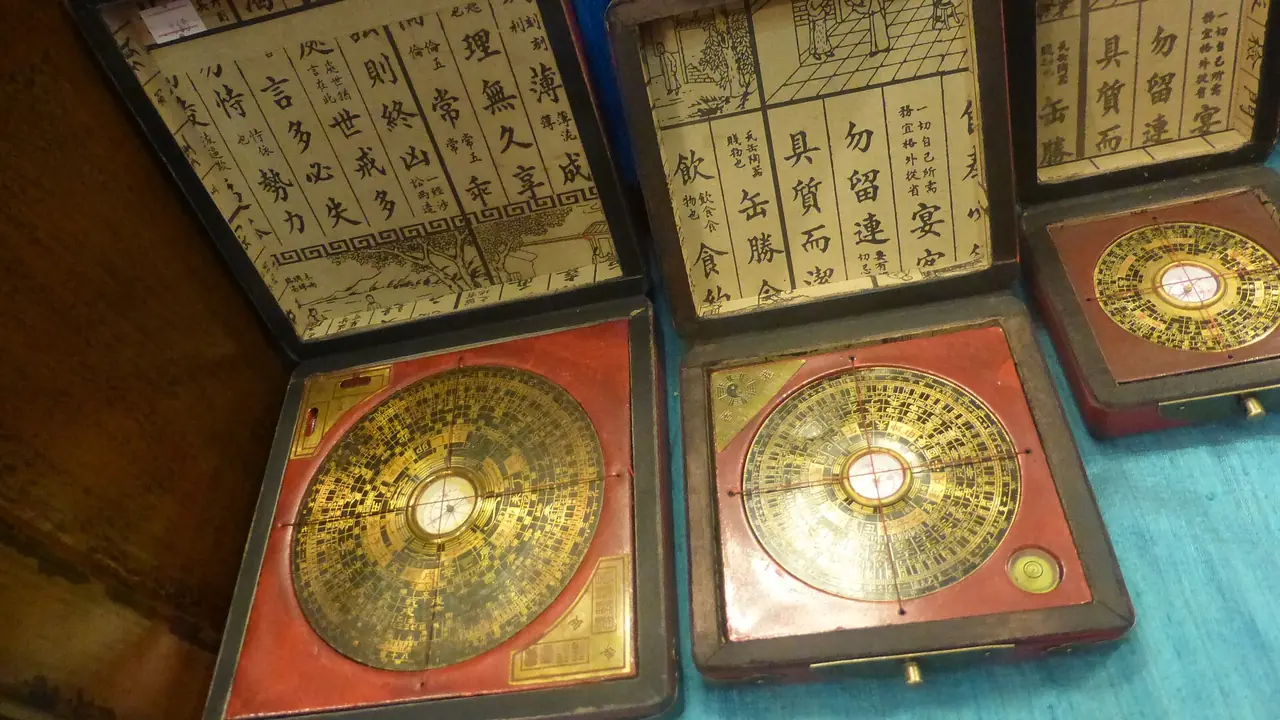
Feng shui consultants usually start with the three places where you spend the most time: the bed, the desk and the front door. Point the top of your head toward a lucky direction while you sleep, face a lucky direction while you work, and, if you can choose a home, prefer a main door that faces your Sheng Qi or Tian Yi direction. Unlucky sectors are not wasted: they are the traditional place for bathrooms, storage and the stove, which is said to burn away negative energy while facing a good direction.
Directions are taken with a compass from the centre of the home. Your lucky colours come from the element of your birth year; you can explore it further on the zodiac by birth year page, and check how two people’s Kua numbers fit together with the compatibility tool.
Frequently asked questions
How is the Kua number calculated?
Add the last two digits of the lunar birth year and reduce to one digit. For births from 1900 to 1999, men subtract that digit from 10 and women add 5 (reducing again if needed); from 2000 onward, men subtract it from 9 and women add 6. A result of 5 becomes 2 for men and 8 for women. The tool does this for you.
Why do men and women born in the same year get different Kua numbers?
The Eight Mansions school counts the trigrams in opposite directions for men and women, following Yin and Yang. A man and a woman born in 1990, for example, have Kua 1 and Kua 8.
What if my partner and I are in different groups?
This is very common. Choose the front door for the main earner or the person who spends most time at home, then give each person a favourable bed or desk direction.
Do I measure the direction the door faces or where it is?
For the main door, use the direction you face when you stand inside looking out. For the bed, use the direction the top of your head points; for a desk, the direction you face while seated.
Is my lucky colour based on my Kua?
No. Following Vietnamese custom, lucky colours come from the nạp âm element of your birth year (for example Roadside Earth for 1990), not from the Kua trigram.
Does feng shui really work?
Feng shui is a traditional design philosophy, not a science. Many people find that arranging a calm, well-lit home that follows its principles feels good, and that is a fine reason to use it.